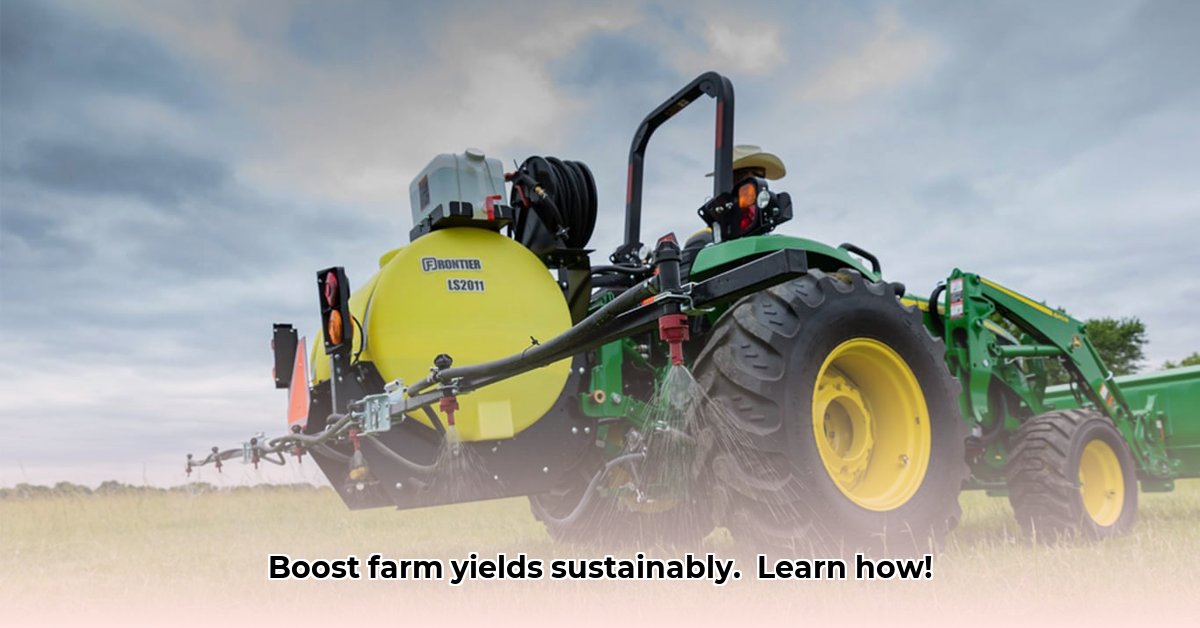
Sprayer Tractor Mounted: Optimizing Farm Efficiency and Sustainability
Choosing the right equipment is paramount for modern farming. For many, a tractor-mounted sprayer is indispensable, not only for pest control but also for maximizing yields and safeguarding the environment. This article provides a comprehensive guide to these versatile machines, empowering you to make informed decisions that enhance both farm productivity and environmental responsibility. For more on tall sprayer options, check out this helpful resource: Tall Tractor Sprayers.
Types of Tractor-Mounted Sprayers: A Detailed Overview
Tractor-mounted sprayers aren't one-size-fits-all; several types cater to diverse farm needs. The best choice hinges on factors like crop type, farm size, and budget.
Boom Sprayers
These are the industry workhorses, using a long boom with multiple nozzles for wide-area coverage. Ideal for large fields of row crops like corn and soybeans, they offer high efficiency and consistent application.
Boomless Sprayers (Airblast Sprayers)
Utilizing powerful fans to atomize and distribute chemicals, these are suited for orchards, vineyards, and high-density plantings where booms are impractical. Their ability to reach taller plants makes them highly versatile.
Air-Assisted Sprayers
Combining the even coverage of boom sprayers with the extended reach and penetration of airflow, these are versatile options adaptable to various crops and field sizes.
Choosing the right type involves considering the specifics of your farming operation. A smaller farm might find a boomless sprayer sufficient, while large-scale operations likely benefit from the efficiency of a high-capacity boom sprayer.
Sustainable Farming Practices with Tractor-Mounted Sprayers: Precision's Power
Modern, sustainable farming emphasizes precision and efficiency. Tractor-mounted sprayers are key enablers of this shift:
Reduced Chemical Use: Precise application minimizes chemical waste, reducing the overall amount of pesticides needed. This translates to significant cost savings and decreased environmental impact. Studies show that precision spraying can reduce pesticide use by up to 40%.
Water Conservation: Targeted spraying dramatically reduces water usage, conserving this precious resource. This is particularly important in regions facing water scarcity.
Minimized Drift: Drift, the unintentional dispersal of spray particles, is a major environmental concern. Precision spraying significantly reduces drift, protecting surrounding ecosystems and waterways. Reduced drift also minimizes the risk of damage to neighboring crops.
Actionable Steps for Successful Spraying: A Practical Guide
Maximizing your sprayer's benefits requires careful planning and execution.
1. Pre-Spray Preparation: * Thoroughly clean your sprayer to prevent contamination. * Carefully review and follow the chemical product label instructions. * Accurately mix chemicals according to label directions. Accurate dilution is critical for effectiveness and safety.
2. Calibration and Application: * Meticulously calibrate your sprayer to ensure accurate chemical application rates. Inaccurate calibration leads to inefficiencies which have economic and environmental implications. * Maintain consistent speed during application to prevent over- or under-spraying. * Monitor weather conditions; avoid spraying in windy conditions or during rainfall.
3. Post-Spray Procedures: * Clean your sprayer immediately after application. * Maintain detailed application records (date, time, chemicals, rates, weather conditions). This is crucial for compliance and future planning.
4. Ongoing Maintenance: Regular maintenance – checking nozzle flow rates and inspecting belts and hoses – keeps your sprayer functioning optimally, enhancing precision and longevity.
These steps are equally vital for both large and small-scale farming operations. Resource sharing and equipment leasing can make precision spraying accessible to all farmers.
Technology's Impact: The Future of Precision Spraying
Technological advancements are revolutionizing precision spraying, boosting efficiency and sustainability:
GPS Guidance: GPS-guided systems ensure accurate application, preventing overlaps and gaps. This leads to more efficient chemical use and consistent coverage.
Sensor-Based Application: Sensors monitor real-time conditions, adjusting spray rates based on factors like crop density and soil moisture. This "smart spraying" optimizes resource utilization and minimizes environmental impacts.
Artificial Intelligence (AI): AI-driven systems promise even greater precision by analyzing data and predicting optimal spray times and rates, further enhancing efficiency and sustainability.
Although these technologies demand higher upfront investments, their long-term benefits regarding efficiency and reduced environmental impact are substantial.
The Financial Picture: A Cost-Benefit Analysis
While the initial investment in a precision sprayer can be significant, the long-term economic benefits often outweigh the cost:
- Reduced Chemical Costs: Targeted spraying lowers chemical use, directly translating into cost savings.
- Increased Efficiency: Precise application saves time, fuel, and labor.
- Improved Yields: Healthier plants yield better harvests.
- Environmental Benefits: Reduced environmental impact minimizes the risk of fines and associated penalties.
A careful cost-benefit analysis tailored to your farm's specific needs is essential to determine the financial viability of this investment.
Navigating Regulations: Compliance and Sustainability
Regulations surrounding pesticide use are crucial for environmental protection and responsible land management. Precision spraying, by reducing drift and optimizing chemical use, facilitates compliance. Familiarize yourself with local regulations and seek guidance from relevant agricultural extension services.
Conclusion: Embracing Precision for a Sustainable Future
Precision spraying isn't a panacea, but a powerful tool for enhancing farm efficiency and promoting environmental stewardship. It represents a substantial step toward building a more sustainable and profitable agricultural sector. By carefully evaluating your individual farm needs and staying abreast of ongoing technological advancements, you can leverage the power of precision spraying to build a more sustainable and profitable farming operation for years to come.